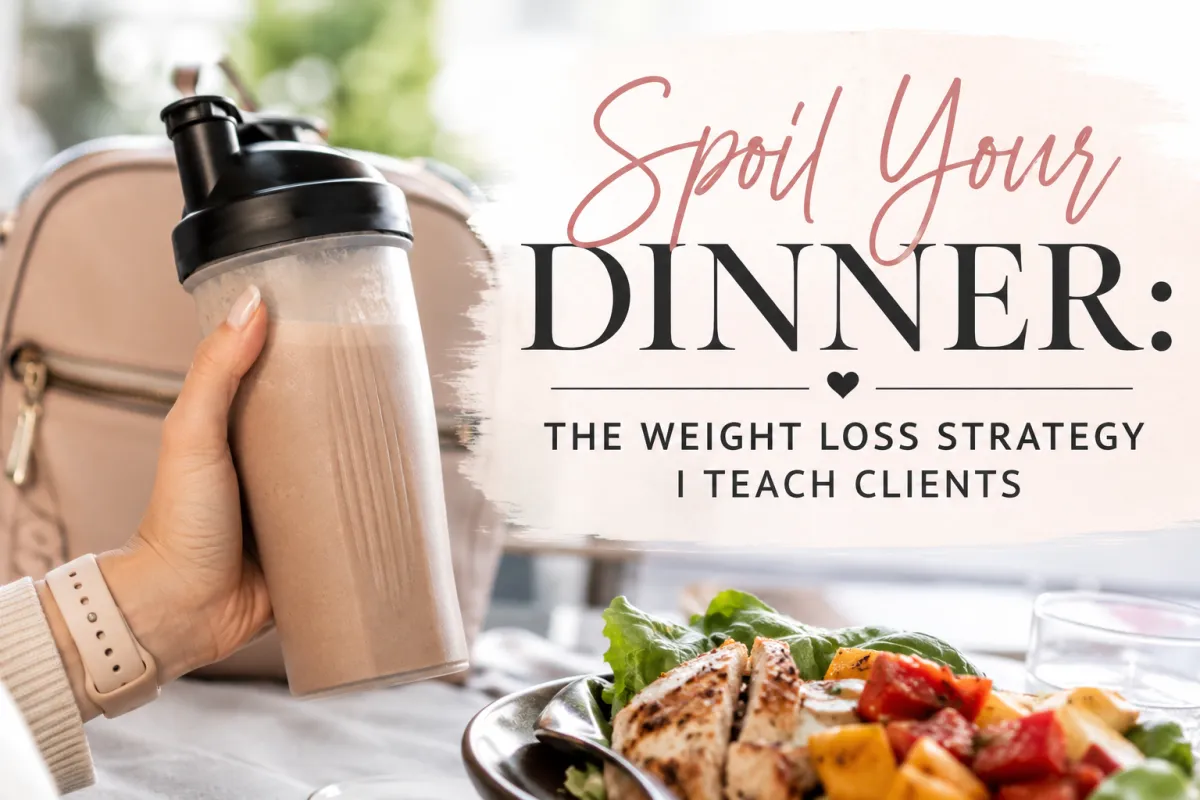
Why I Tell Clients to "Spoil Their Dinner"
Growing up, most of us heard the same thing:
"Don't spoil your dinner."
Meaning don't eat anything before the meal because you'll ruin your appetite.
But after years of coaching women through weight loss, I've found the opposite is often true.
Over the years, I developed a strategy that became one of my favorite coaching tools: "Spoil Your Dinner." Despite the name, it isn't just for dinner.
It's a simple technique that I teach clients to use before dinner dates, baby showers, holiday gatherings, brunch with friends, birthday parties, weddings, and pretty much any event where food is involved. The reason is simple: most women walk into these situations way too hungry.
The Problem With Saving Calories
Think about it.
You know you're going out to dinner later, so you try to "be good" all day. Maybe lunch is smaller than usual. Maybe you skip your afternoon snack. Maybe you tell yourself you'll save calories now because you'll eat more later.
On paper, that sounds like a smart idea.
In reality, it often backfires.
By the time you arrive at the restaurant, your friend's house, or the holiday gathering, you're starving. Not hungry. Starving. The bread basket arrives and suddenly you're eating without thinking. You start picking at appetizers while talking, grabbing snacks from the kitchen, and ordering whatever sounds the most filling because your main goal is making the hunger go away.
Then afterwards, you're frustrated with yourself.
You tell yourself you have no self-control around food. You promise you'll do better next time. But what if the problem isn't your self-control?
What if the problem is that you're showing up so hungry that your hunger is making the decisions for you?
What Is "Spoil Your Dinner"?
The strategy is simple.
About 30 to 60 minutes before an event, meal, or gathering, have a small protein-forward snack. Not a meal. Not enough to fill you up. Just enough to take the edge off your hunger.
This might be a protein shake on the drive to a baby shower, a protein bar before heading to a friend's house for dinner, a Greek yogurt before Thanksgiving festivities begin, or cottage cheese before brunch with friends.
The goal isn't to ruin your appetite.
The goal is to prevent extreme hunger from making decisions for you.
Mindless Hunger vs. Mindful Hunger
One of the reasons I love this strategy is because it helps shift you from mindless hunger to mindful hunger.
Mindless hunger happens when you've waited too long to eat. You're so hungry that food becomes the only thing you can think about. You eat quickly, grab whatever is available, and often continue eating before you've even had a chance to assess how hungry you actually are.
Mindful hunger looks very different. You're hungry enough to enjoy the meal, but not so hungry that your hunger is running the show. You can slow down, look at your options, decide what sounds good, and recognize when you're starting to feel satisfied.
This is the sweet spot.
The goal isn't to eliminate hunger altogether. The goal is to arrive hungry enough to enjoy the experience while staying connected to your choices around food.
The Science Behind It
Research consistently shows that protein is one of the most satiating nutrients we can eat. Compared to carbohydrates and fats, protein tends to increase feelings of fullness and reduce hunger for longer periods of time.
Protein also influences hormones involved in appetite regulation, helping to slow digestion and keep you feeling satisfied. This doesn't mean a protein shake magically prevents overeating, but it does help reduce the intensity of hunger.
When hunger becomes less intense, something interesting happens.
You become more aware of your choices.
You can actually determine whether you're eating because you're hungry, because the food looks good, because everyone else is eating, because you're stressed, or because you're celebrating. Without extreme hunger screaming at you, it's easier to separate physical hunger from all the other reasons we eat.
My Favorite Example: Thanksgiving
Thanksgiving is one of the best examples of why this strategy works.
Many people intentionally eat less throughout the day because they know they're having a large dinner. They skip breakfast, have a tiny lunch, and spend the entire day trying to save calories.
Then the appetizers come out.
They start grazing while cooking. They snack while socializing. They pick at food every time they walk through the kitchen. By the time dinner is served, they've already eaten a significant amount without even realizing it.
Then they blame themselves for lacking willpower.
But imagine having a Greek yogurt or protein shake about an hour before everyone arrives.
Would you still enjoy Thanksgiving dinner?
Absolutely.
Would you still eat stuffing, mashed potatoes, dessert, and all your favorite foods?
Of course.
The difference is that you'd be eating those foods because you genuinely wanted them, not because you were trying to recover from hours of hunger.
It's Not About Eating Less
This is where people often misunderstand the strategy.
Spoil Your Dinner isn't designed to help you eat less. It's designed to help you eat more intentionally.
Sometimes you'll still eat a large meal.
Sometimes you'll still have dessert.
Sometimes you'll still go back for seconds.
That's not failure.
The purpose of this strategy is to help you make decisions from a place of awareness instead of urgency. When you stop showing up starving, you give yourself the opportunity to actually practice the habits you're trying to build.
Try It This Week
The next time you're heading to brunch, dinner, a baby shower, a holiday gathering, or any event centered around food, give it a try.
About 30 to 60 minutes beforehand, have a small protein-forward snack and pay attention to how different the experience feels.
How hungry are you when you arrive?
How quickly do you start eating?
How aware are you of your choices?
You may find that the secret isn't eating less at the event.
The secret is giving yourself just enough nourishment beforehand that you can make decisions from a place of awareness instead of urgency.
Because sometimes the best way to enjoy your dinner is to spoil it first.

