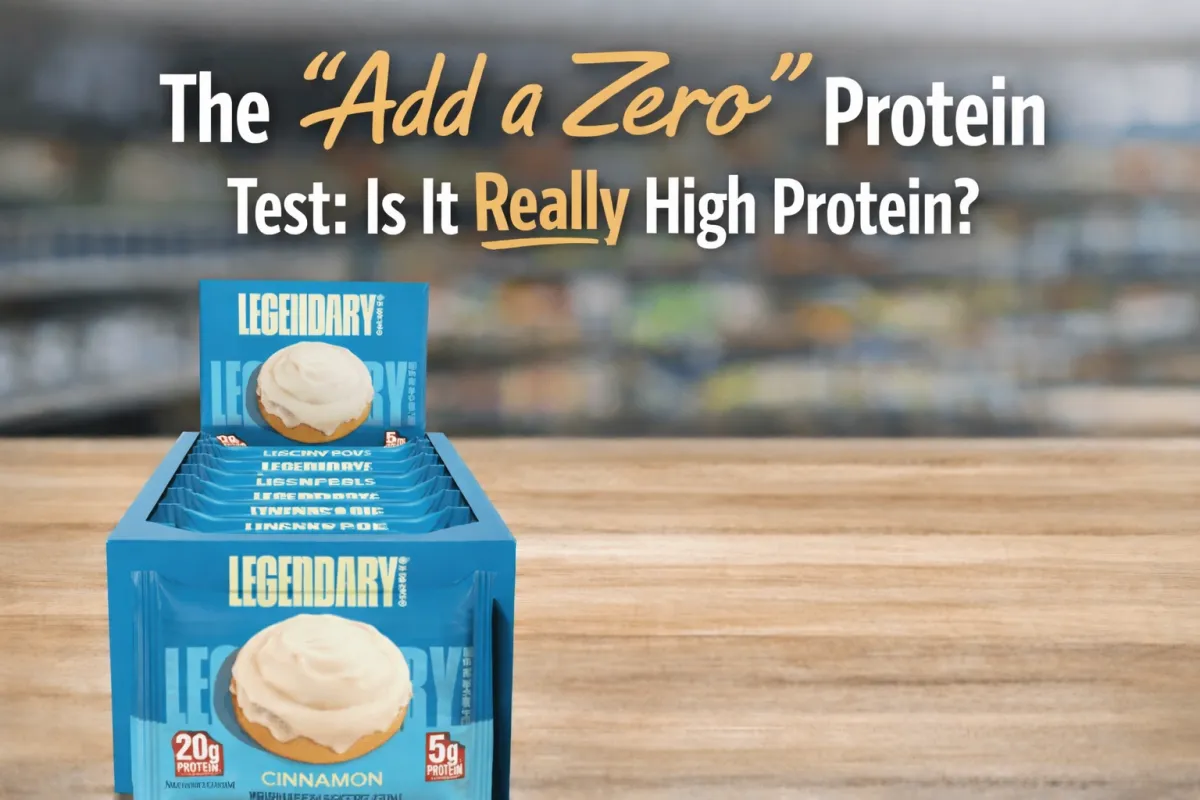
The “Add a Zero” Protein Test
If you’ve been working on weight loss for a while, you probably feel like you know how to read a label.
Calories.
Protein.
Serving size.
But here’s something most people — even experienced dieters — miss.
Just because a product says “high protein” on the front doesn’t mean it is actually high protein or supports fat loss.
As a nutritionist working with women on Long Island, this is one of the most common label mistakes I see.
Let me show you a simple trick.
The “Add a Zero” Protein Test
The next time you pick up a snack that claims to be high protein, flip it over.
Look at:
Grams of protein
Total calories
Now take the grams of protein and add a zero.
Then compare that number to the calories.
Example 1:
13g protein
100 calories
Add a zero → 130
130 is higher than 100.
That’s a high-protein food or snack.
Example 2:
13g protein
230 calories
Add a zero → 130
130 is much lower than 230.
That’s not actually a high-protein snack — even if the front of the package says it is.
Is 13g of protein bad? No.
But for weight loss and fat loss, the protein-to-calorie ratio matters.
Marketing vs. Math
Food companies know “high protein” sells.
But they don’t define high protein in a way that helps your goals.
When you build the habit of flipping the package over and doing this quick check, you move from emotional buying to informed decisions.
And that shift — repeated daily — is what creates real results.
The Bigger Lesson
This little trick means two things:
You now have an easy, practical tool to make smarter nutrition choices.
There is always another level to learn — even for me as a nutritionist.
The women I work with across New York and other cities don’t fail because they’re lazy.
They struggle because they rely on marketing instead of measurable strategy.
Small skills like this build confidence.
Confidence builds consistency.
Consistency drives weight loss.
If you’re tired of guessing and want structure that actually works, that’s exactly what I help my clients build — sustainable habits rooted in awareness, not restriction.
— Rachel Palumbo
Nutritionist | Long Island

